
Blog
Synovial Chondromatosis of the Knee
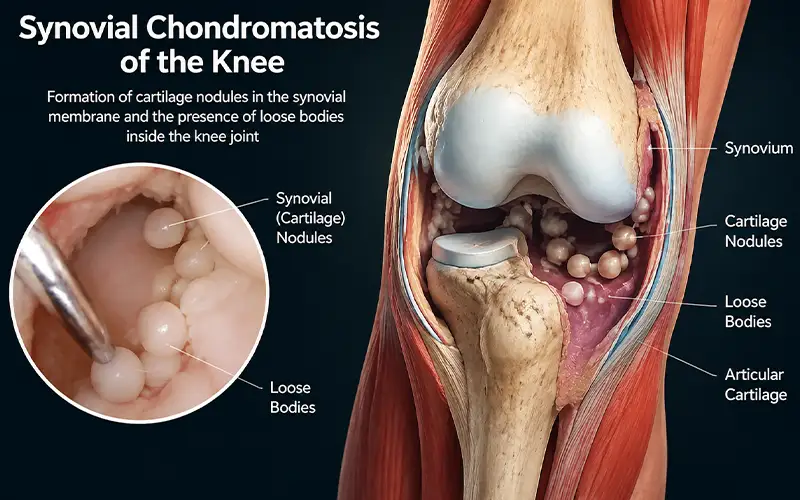
Synovial chondromatosis, also known as osteochondromatosis, is a rare and benign joint disorder characterized by the formation of small cartilage nodules within the synovial membrane. The synovial membrane is a thin layer that lines the inside of joints and produces synovial fluid, which helps reduce friction and allows smooth joint movement.
In this condition, cells within the synovial membrane begin producing abnormal cartilage tissue. Over time, these nodules may grow, detach from the synovial lining, and become loose bodies inside the joint space.
These loose bodies can interfere with normal joint movement and may cause symptoms such as pain, stiffness, limited motion, and mechanical problems like knee locking.
Although synovial chondromatosis can affect different joints, the knee is the most commonly affected joint.
Types of Synovial Chondromatosis
Synovial chondromatosis is generally classified into two main types:
Primary Synovial Chondromatosis
Primary synovial chondromatosis is a rare form of the disease, and its exact cause remains unknown. It usually develops in an otherwise healthy joint and commonly affects people between the ages of 30 and 40.
In this type, abnormal cartilage formation occurs due to changes in the synovial tissue without a clear history of previous joint damage or injury.
Secondary Synovial Chondromatosis
Secondary synovial chondromatosis is more common and usually develops as a result of an existing joint condition. Factors such as osteoarthritis, previous injuries, trauma, or joint degeneration can contribute to the development of this type.
It is more frequently seen in older adults, especially those in their 50s and 60s.
Symptoms of Synovial Chondromatosis of the Knee
The symptoms of synovial chondromatosis often develop gradually and may resemble those of knee osteoarthritis. The severity of symptoms depends on the number and size of cartilage nodules and the amount of joint damage.
Common symptoms include:
Knee Joint Pain
Pain is one of the most common symptoms of this condition. It may occur even at rest but usually becomes worse with movement or physical activity.
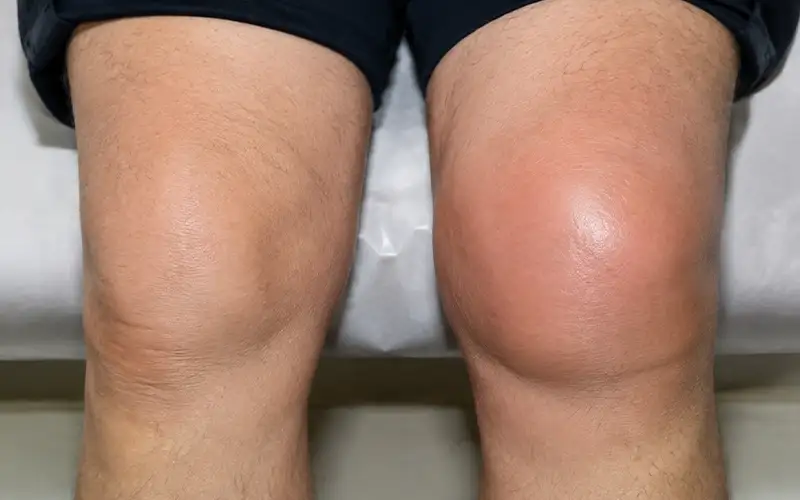
Joint Swelling and Stiffness
The presence of loose bodies inside the joint can lead to inflammation, swelling, and reduced range of motion. Many patients experience stiffness when bending or straightening the knee.
Grinding Sensation or Knee Clicking
Some individuals may notice grinding, popping, or crackling sounds during knee movement. These sensations are usually caused by loose bodies interfering with normal joint function.
Knee Locking or Catching
One of the characteristic symptoms of synovial chondromatosis is mechanical joint blockage. Detached cartilage nodules may become trapped during movement, causing the knee to lock or feel stuck.
Palpable Lumps
In some cases, larger cartilage nodules may become noticeable as small masses around the joint.
What Causes Synovial Chondromatosis?
The exact cause of primary synovial chondromatosis is not fully understood. However, several factors may contribute to the development of secondary cases.
Common associated factors include:
- Previous joint injuries
- Repeated trauma to the knee
- Osteoarthritis and joint degeneration
- Abnormal changes in synovial tissue
Diagnosis of Synovial Chondromatosis
Diagnosing synovial chondromatosis requires a detailed evaluation of symptoms, physical examination, and imaging tests. Since its symptoms can resemble other knee disorders, accurate diagnosis is essential.
Physical Examination
During a physical examination, the doctor evaluates the knee for:
- Swelling
- Joint tenderness
- Range of motion limitations
- Pain during movement
X-Ray Imaging
X-rays are one of the important diagnostic tools for this condition. In many cases, X-rays can reveal multiple calcified or bone-like loose bodies inside the joint.
However, if the cartilage nodules have not yet become calcified, X-ray results may appear normal.
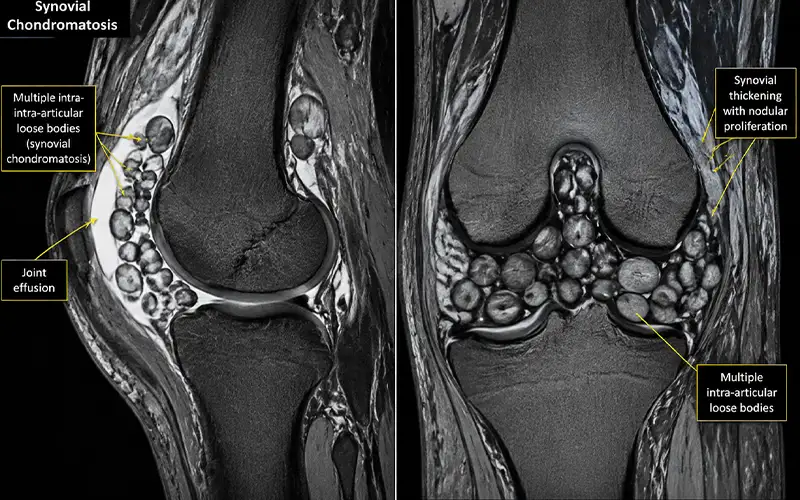
Knee MRI
Magnetic resonance imaging (MRI) is one of the most effective methods for early detection of synovial chondromatosis.
MRI can identify non-calcified cartilage nodules and provide detailed information about the extent of the disease and possible damage to the joint cartilage.
CT Scan
Computed tomography (CT) may be used in some cases to provide clearer images of calcified areas and better evaluate bone structures.
Histopathological Examination
A definitive diagnosis can be confirmed through microscopic examination of synovial tissue or affected nodules removed during surgery.
Treatment of Synovial Chondromatosis of the Knee
The main goals of treatment are reducing pain, improving joint function, preventing further damage, and lowering the risk of recurrence.
Non-Surgical Treatment
For patients with mild symptoms, doctors may recommend conservative treatment options, including:
- Modifying activities that worsen symptoms
- Using nonsteroidal anti-inflammatory drugs (NSAIDs)
- Applying cold therapy to reduce inflammation
However, non-surgical treatments usually cannot remove the existing cartilage nodules.
Surgical Treatment
Surgery is often recommended when symptoms become severe or joint movement is significantly affected.
Removal of Loose Bodies
During this procedure, cartilage nodules and loose bodies inside the joint are removed. This is often performed using minimally invasive arthroscopic surgery, which typically provides faster recovery compared with open surgery.
Synovectomy
In some patients, part of the synovial membrane responsible for producing new nodules may also be removed. This procedure can be performed arthroscopically or through open surgery depending on the extent of the disease.
Knee Replacement Surgery
If the condition has caused severe joint damage or advanced osteoarthritis, total knee arthroplasty (knee replacement surgery) may be necessary.
Prognosis and Risk of Recurrence
Synovial chondromatosis is generally a benign condition, and many patients experience improvement after treatment. However, recurrence after surgery is possible and has been reported in up to approximately 20% of patients.
The prognosis depends on several factors, including:
- The stage of the disease at diagnosis
- Whether the condition is primary or secondary
- The level of joint damage
- The completeness of surgical removal
Regular follow-up appointments and imaging tests are important for detecting recurrence and monitoring the progression of osteoarthritis.
Although extremely rare, malignant transformation into conditions such as chondrosarcoma has been reported, which makes long-term medical monitoring important.
Conclusion
Synovial chondromatosis of the knee is a rare but significant joint disorder caused by the formation of cartilage nodules in the synovial membrane. This condition can lead to pain, swelling, restricted movement, and knee locking.
Accurate diagnosis usually involves physical examination, imaging techniques such as MRI, and in some cases histopathological analysis. Treatment options vary depending on the severity of the condition, ranging from symptom management to surgical removal of loose bodies and joint repair procedures.
Early diagnosis and appropriate treatment can help prevent further joint damage and improve the patient’s quality of life.
Trigger Finger is one of the common tendon disorders affecting hand movement. To learn more about its symptoms, causes, and treatment, explore our detailed article on Trigger Finger.