
Blog
Types of Anterior Cruciate Ligament Grafts
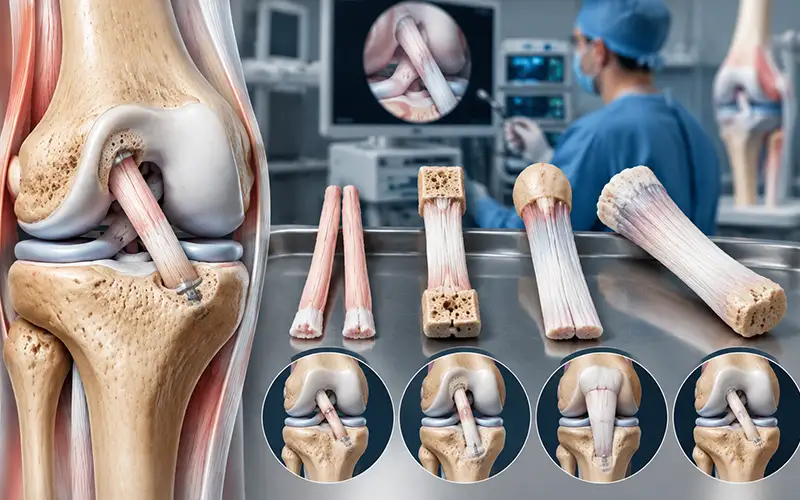
An anterior cruciate ligament (ACL) tear is one of the most common knee injuries, especially among athletes and individuals who participate in physically demanding activities. The ACL plays an essential role in maintaining knee stability by preventing excessive forward movement and abnormal rotation of the tibia.
In many cases, particularly among young and active patients, surgical treatment known as ACL reconstruction is recommended to restore knee stability and allow the patient to return to daily activities and sports.
During ACL reconstruction surgery, the damaged ligament is replaced with a new tissue called an anterior cruciate ligament graft. Choosing the appropriate anterior cruciate ligament graft is one of the most important decisions in the treatment process because the graft type can influence healing, graft strength, knee function, and the likelihood of returning to previous activity levels.
Different types of anterior cruciate ligament grafts are available, including autografts, which use tissue from the patient’s own body, and allografts, which use donor tissue. The ideal choice depends on several factors, including the patient’s age, activity level, lifestyle, knee condition, and the surgeon’s assessment.
What Is an Anterior Cruciate Ligament Graft?
An anterior cruciate ligament graft is a tissue replacement used during ACL reconstruction surgery to replace the torn or damaged ACL. When the ACL is completely ruptured, direct repair is often not possible, and surgeons reconstruct the ligament using a suitable graft.
The main purpose of an anterior cruciate ligament graft is to restore knee stability, prevent abnormal joint movements, and help patients regain normal physical function.
After implantation, the graft gradually integrates with the surrounding bone and soft tissues through a process called ligamentization, eventually functioning similarly to the original ACL.
Types of Anterior Cruciate Ligament Grafts
Generally, anterior cruciate ligament grafts are divided into two main categories:
- Autograft
- Allograft
Each option has specific advantages and limitations, and the final decision should be made according to the individual patient’s condition.
Autograft Anterior Cruciate Ligament Reconstruction
An autograft is one of the most commonly used options for an anterior cruciate ligament graft. In this method, tissue is harvested from another part of the patient’s own body and used to reconstruct the ACL.
Because the graft comes from the patient, the risk of immune rejection is minimized, and biological compatibility is generally excellent.
The main types of ACL autografts include:
- Hamstring tendon graft
- Patellar tendon graft (Bone-Patellar-Bone)
- Quadriceps tendon graft
Hamstring Tendon Graft
The hamstring tendon graft is one of the most frequently used types of anterior cruciate ligament grafts. In this technique, the gracilis and semitendinosus tendons are commonly harvested and folded into multiple layers to create a strong graft suitable for ACL reconstruction.
Advantages of Hamstring Tendon Graft:
- Less pain at the graft harvesting site compared with some other techniques
- Less impact on the front of the knee
- Suitable for many patients with moderate activity levels
Limitations of Hamstring Tendon Graft:
- Possible reduction in hamstring muscle strength
- Higher failure rates have been reported in some high-level athletes compared with certain other graft options
This graft is often considered a suitable choice for many patients, depending on their activity level and treatment goals.
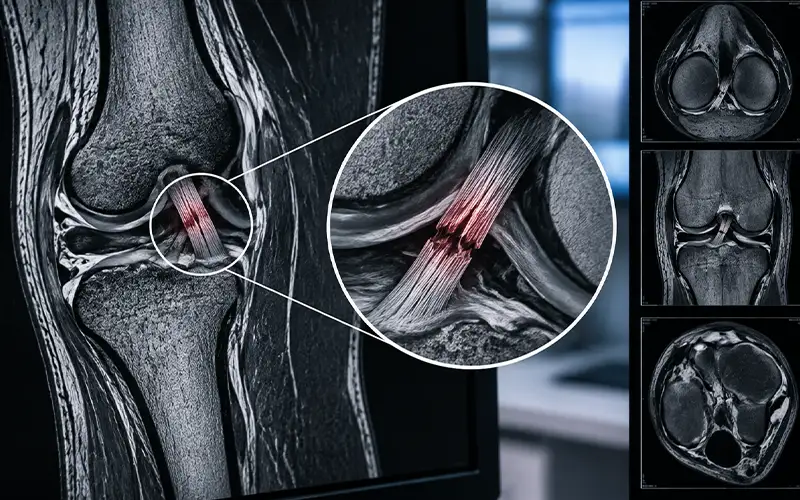
Patellar Tendon Graft (Bone-Patellar-Bone)
The patellar tendon graft is one of the most established techniques for ACL reconstruction. In this method, the middle third of the patellar tendon is harvested along with bone blocks from the patella and tibia.
The presence of bone segments allows strong fixation and faster bone-to-bone healing after surgery.
Advantages of Patellar Tendon Graft:
- High initial strength
- Excellent fixation stability
- Frequently considered for young and competitive athletes
Possible Disadvantages:
- Anterior knee pain
- Discomfort when kneeling
- Potential problems at the tendon harvesting site
Due to its strength and reliability, the patellar tendon graft remains an important option for ACL reconstruction.
Quadriceps Tendon Graft
The quadriceps tendon is another option used as an anterior cruciate ligament graft. In this technique, a portion of the quadriceps tendon is harvested, with or without a bone segment from the patella.
Although it is used less frequently than hamstring or patellar tendon grafts, it can be a valuable option in specific patients.
Features of Quadriceps Tendon Graft:
- Large graft size and suitable tissue volume
- Useful in complex ACL reconstruction cases
- Reduced stress on the patellar tendon area
The choice of this graft depends on the surgeon’s evaluation and the patient’s specific requirements.
Allograft Anterior Cruciate Ligament Reconstruction
An allograft is an anterior cruciate ligament graft obtained from donor tissue rather than the patient’s own body.
Common allograft sources include:
- Achilles tendon
- Anterior tibialis tendon
One of the main benefits of an allograft is that it eliminates the need for graft harvesting from the patient, which may reduce surgical time and postoperative discomfort.
Advantages of Allograft
The main benefits of using an allograft for ACL reconstruction include:
- Reduced pain at the graft harvesting site
- Smaller number of surgical incisions
- Shorter surgical procedure
- Suitable for selected patients with lower physical demands

Disadvantages of Allograft
Despite its advantages, allograft use has some limitations, including:
- Higher risk of graft failure in certain patient groups
- Very low risk of infectious disease transmission
- Different biological incorporation process compared with autografts
Therefore, choosing an allograft should always be based on careful evaluation of the patient’s age, lifestyle, and activity requirements.
How Is the Best Anterior Cruciate Ligament Graft Selected?
Selecting the most appropriate anterior cruciate ligament graft depends on several important factors, including:
- Patient’s age
- Sports activity level
- Occupation and physical demands
- Condition of surrounding knee muscles
- Associated knee injuries
- Previous ACL surgeries
For example, young athletes who participate in high-intensity sports may require a graft with excellent strength and stability, while less active patients may have different treatment priorities.
Conclusion
An anterior cruciate ligament graft is one of the most important components of ACL reconstruction surgery and plays a key role in restoring knee stability after ligament injury.
Different graft options, including hamstring tendon grafts, patellar tendon grafts, quadriceps tendon grafts, and allografts, each have their own benefits and limitations. There is no single graft option that is ideal for every patient, and the best choice depends on individual factors and the orthopedic surgeon’s recommendation.
Choosing the appropriate anterior cruciate ligament graft can significantly improve surgical outcomes, reduce the risk of re-injury, and help patients return to normal daily activities and sports.
For more information about knee injuries, ACL reconstruction surgery, ligament treatments, and advanced orthopedic procedures, explore other specialized articles on our website.